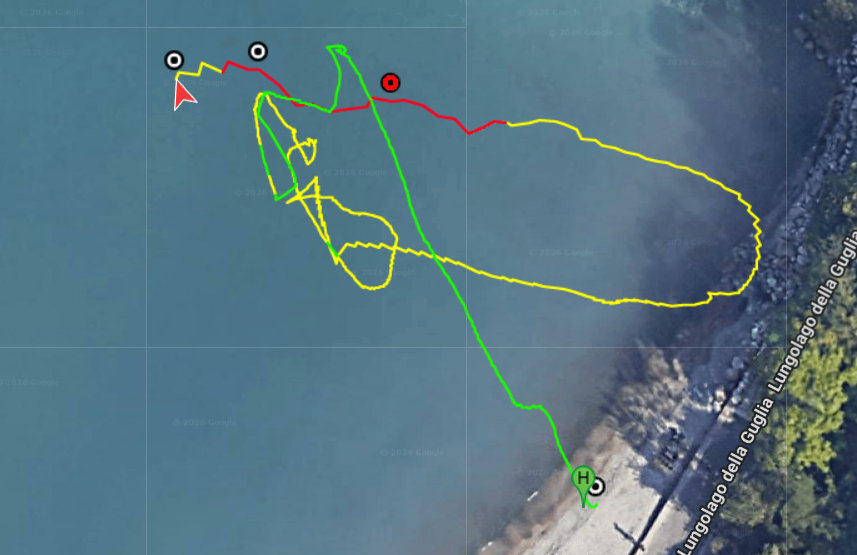
The short version: while flying over a lake, the drone appeared not to hold position when no
control input was applied. I decided to bring it back. During that return, the controls felt
abnormal and, around 01:38 into the flight, the aircraft appeared to stop
responding normally to my inputs. It began increasing bank angle and speed, then impacted the
water at about 43 mph according to the flight logs.
Before takeoff
Before launching, I checked the local flight restrictions and confirmed that the aircraft had
GPS lock. I launched from a hard drone case placed on a pebbled beach, specifically to avoid
kicking sand or small stones into the drone during takeoff.
First sign something felt wrong
While the drone was over the water, it did not seem to hold position when I was not giving
control input. It appeared to drift, so I decided to bring it back toward shore rather than
continue flying over the lake.
Return attempt
As I was bringing it back, the controls started to feel abnormal and less predictable than I
expected. My goal was to position the drone above or near me, but it overshot that intended
position instead of settling where I wanted it.
The crash sequence
The aircraft then moved back out toward the lake. Around 01:38 in the flight
log, the apparent loss-of-control phase begins. The drone entered an unexpected arc, the bank
angle kept increasing, speed built up, and it impacted the water at about 43 mph according to the logs.
After the impact, I tried to keep my eyes locked on the splash location and rushed into the
water as quickly as I could. Even then, I could not find the drone exactly where I thought it
had gone in, so I ended up combing the lake bed while trying not to lose my reference point.
After roughly 10 to 15 minutes, I finally saw the drone lying on the bottom
of the lake and fished it out. I immediately pulled the battery.
After recovering the drone, I let it dry out for a few days before attempting to power it on again.
To my surprise, it powered on and I was able to connect to it with the DJI app. Two motors had
some resistance when I spun them by hand, but it did not seem severe: I could still move the
props by blowing on them.
I decided to make a few very low-altitude test flights to clear the motors and check whether the
drone was still safe to fly. I was still replaying the crash in my head and wondering what I
could have done differently. One thing I realized was that, during the lake incident, I had not
pressed the HOLD button on the remote; I had simply stopped giving control inputs. I wondered
whether pressing HOLD would have helped the drone stabilize, so I decided to practice that
reaction.
I switched the drone to Sport mode, as it had been on the accident day, accelerated it, and
pressed HOLD when it was near me. I was flying mainly by eye. The drone pitched nose-up and
stopped sharply, but then something strange happened. I remember seeing a warning on the screen
that looked like “max angle” or similar, and at that moment all motors shut off and the drone
fell to the ground.
Because the drone had already been underwater, I've wrote it off to water damage or motor blocking due to sand residue.
I was surprised and relieved that the drone worked at all after the lake recovery, which says something about DJI's build quality.
Back at the hotel, I submitted a flight analysis request through the DJI app for the lake crash
and uploaded the flight logs. At the end of the submission, the app showed a QR code, but I did
not receive a confirmation email or any other follow-up. Since I was still on vacation with my
family, I continued using the drone normally for the rest of the trip.
After returning home, I contacted DJI Support with the QR code. They told me to send in the
drone because it was under warranty. Since I care about flight safety, I agreed to send it in;
my main interest was not the repair itself, because the drone was still working, but understanding
what caused the original loss of control over the lake.
Unfortunately, DJI analyzed the wrong log: the later low-altitude test flight after the water
crash, not the actual lake incident. Despite my repeated requests for them to analyze the crash
log, they refused to do so.
If you have any ideas what might have caused the initial loss of control and crash, post them in this Reddit thread